General Chair
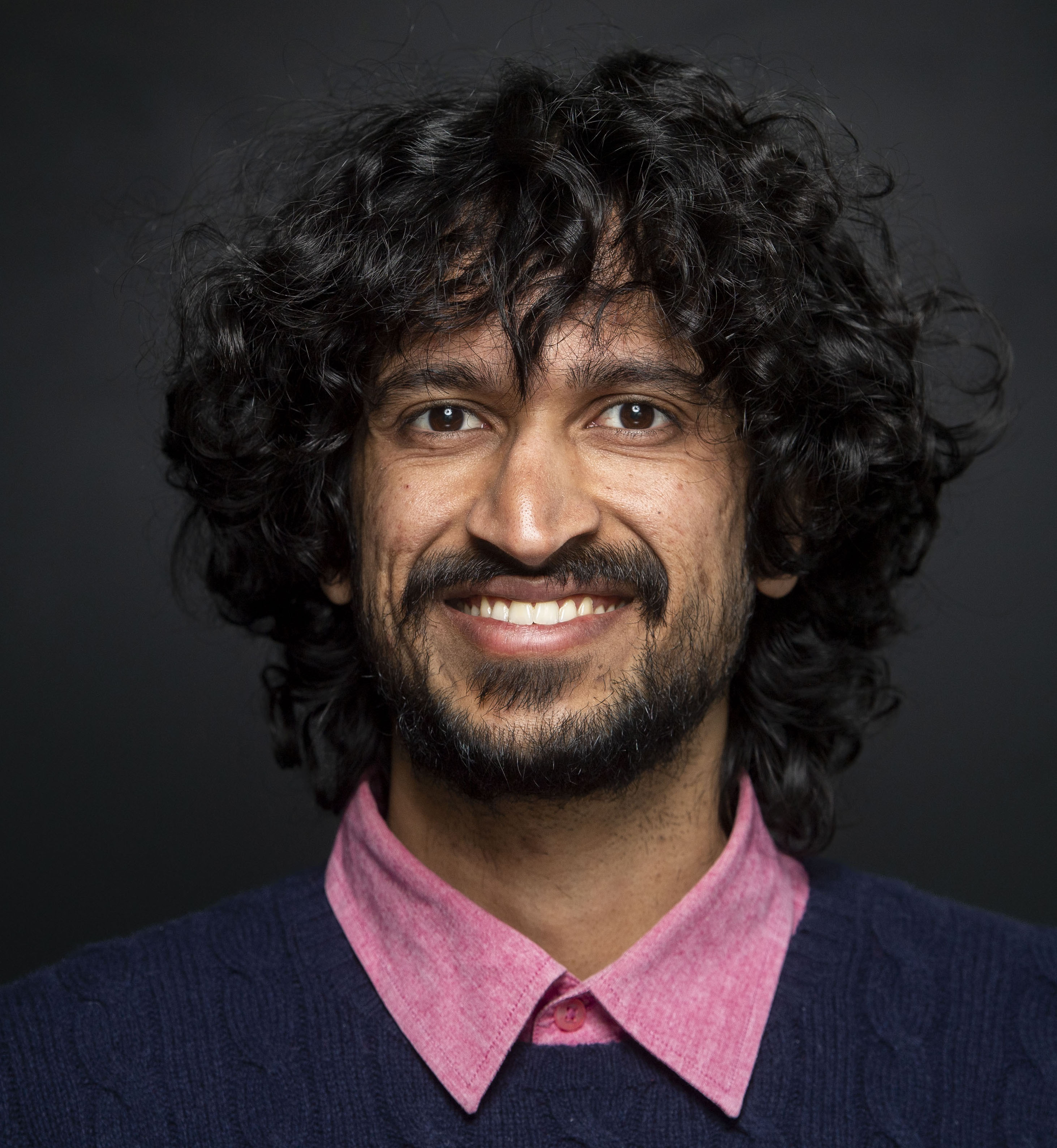
Aaditya Ramdas
Stanford University
Aaditya Ramdas (PhD, 2015) is an assistant professor at Carnegie Mellon University, in the Departments of Statistics and Machine Learning. His research interests include game-theoretic statistics and sequential anytime-valid inference, multiple testing and post-selection inference, and predictive uncertainty quantification (conformal prediction, calibration). His applied areas of interest include neuroscience, genetics and auditing (real-estate, finance, elections). Aaditya received the IMS Peter Gavin Hall Early Career Prize, the COPSS Emerging Leader Award, the Bernoulli New Researcher Award, the NSF CAREER Award, the Sloan fellowship in Mathematics, and faculty research awards from Adobe and Google. He also spends 20% of his time at Amazon working on causality and sequential experimentation.
Aaditya Ramdas (PhD, 2015) is an assistant professor at Carnegie Mellon University, in the Departments of Statistics and Machine Learning. His research interests include game-theoretic statistics and sequential anytime-valid inference, multiple testing and post-selection inference, and predictive uncertainty quantification (conformal prediction, calibration). His applied areas of interest include neuroscience, genetics and auditing (real-estate, finance, elections). Aaditya received the IMS Peter Gavin Hall Early Career Prize, the COPSS Emerging Leader Award, the Bernoulli New Researcher Award, the NSF CAREER Award, the Sloan fellowship in Mathematics, and faculty research awards from Adobe and Google. He also spends 20% of his time at Amazon working on causality and sequential experimentation.
General Chair
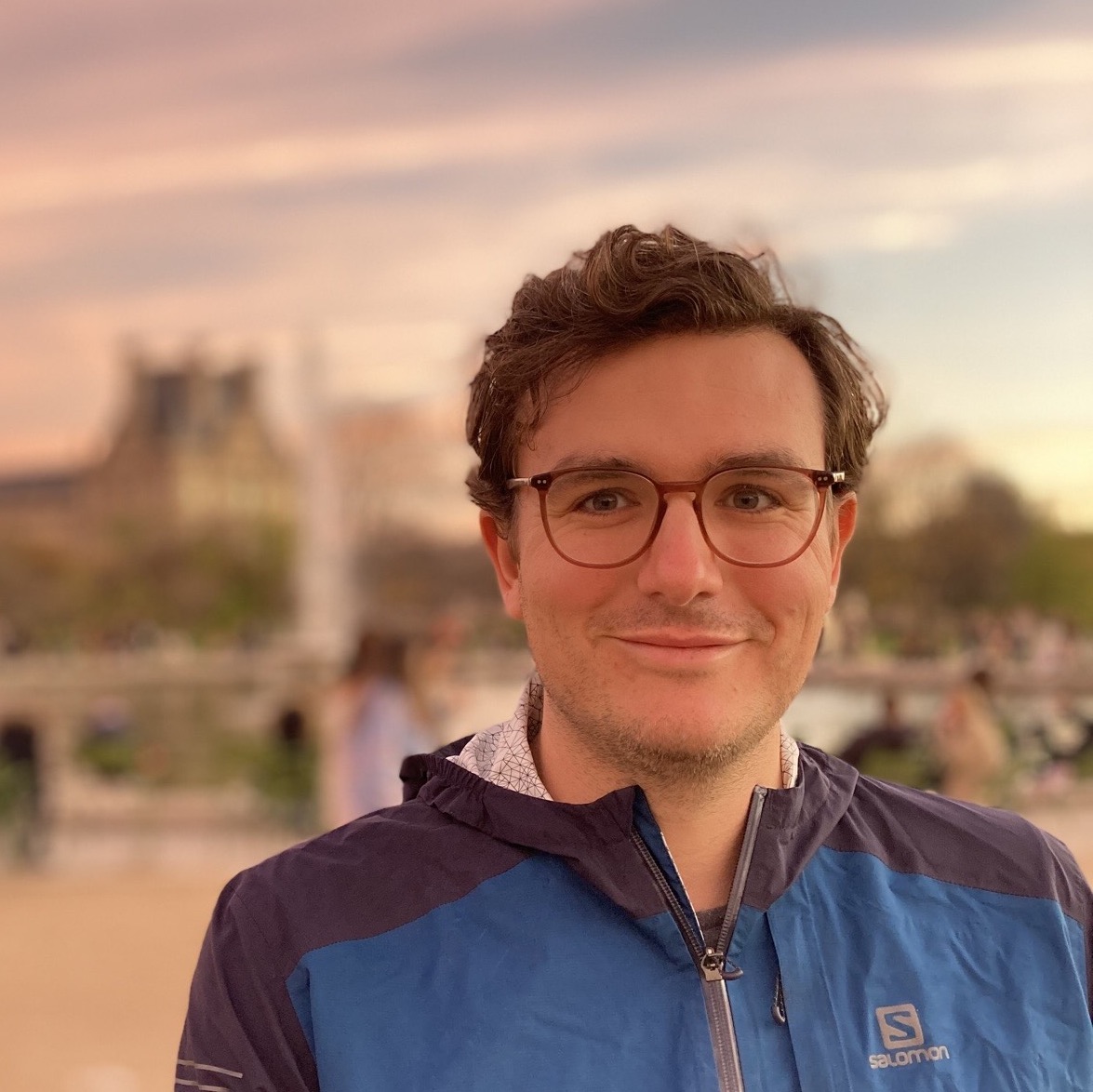
Arno Solin
ELLIS Institute Finland / Aalto University
Arno Solin is an Associate Professor with tenure in Machine Learning at Aalto University and a Principal Investigator at ELLIS Institute Finland. His research focuses on probabilistic machine learning, scalable inference, uncertainty quantification, robustness, and Gaussian processes, with applications in signal processing, sensor fusion, and spatial AI. He is also an ELLIS Scholar and leads a machine learning research group affiliated with Aalto University, FCAI, and ELLIS Institute Finland. His work has received multiple awards and has contributed to both academic research and industrial applications, including the spin-off company Spectacular AI.
Arno Solin is an Associate Professor with tenure in Machine Learning at Aalto University and a Principal Investigator at ELLIS Institute Finland. His research focuses on probabilistic machine learning, scalable inference, uncertainty quantification, robustness, and Gaussian processes, with applications in signal processing, sensor fusion, and spatial AI. He is also an ELLIS Scholar and leads a machine learning research group affiliated with Aalto University, FCAI, and ELLIS Institute Finland. His work has received multiple awards and has contributed to both academic research and industrial applications, including the spin-off company Spectacular AI.
Program Chair
Quentin Berthet
Google DeepMind
Quentin Berthet is a Research Scientist at Google DeepMind in Paris. His work focuses on core machine learning, using tools from statistics and optimization to improve modern ML methods, with interests spanning differentiable optimization, scalable learning, and statistical-computational tradeoffs. Before joining Google, he was a Lecturer in the Statistical Laboratory at the University of Cambridge and a postdoctoral fellow at Caltech. He earned his PhD from Princeton University and is an alumnus of École Polytechnique.
Quentin Berthet is a Research Scientist at Google DeepMind in Paris. His work focuses on core machine learning, using tools from statistics and optimization to improve modern ML methods, with interests spanning differentiable optimization, scalable learning, and statistical-computational tradeoffs. Before joining Google, he was a Lecturer in the Statistical Laboratory at the University of Cambridge and a postdoctoral fellow at Caltech. He earned his PhD from Princeton University and is an alumnus of École Polytechnique.
Program Chair
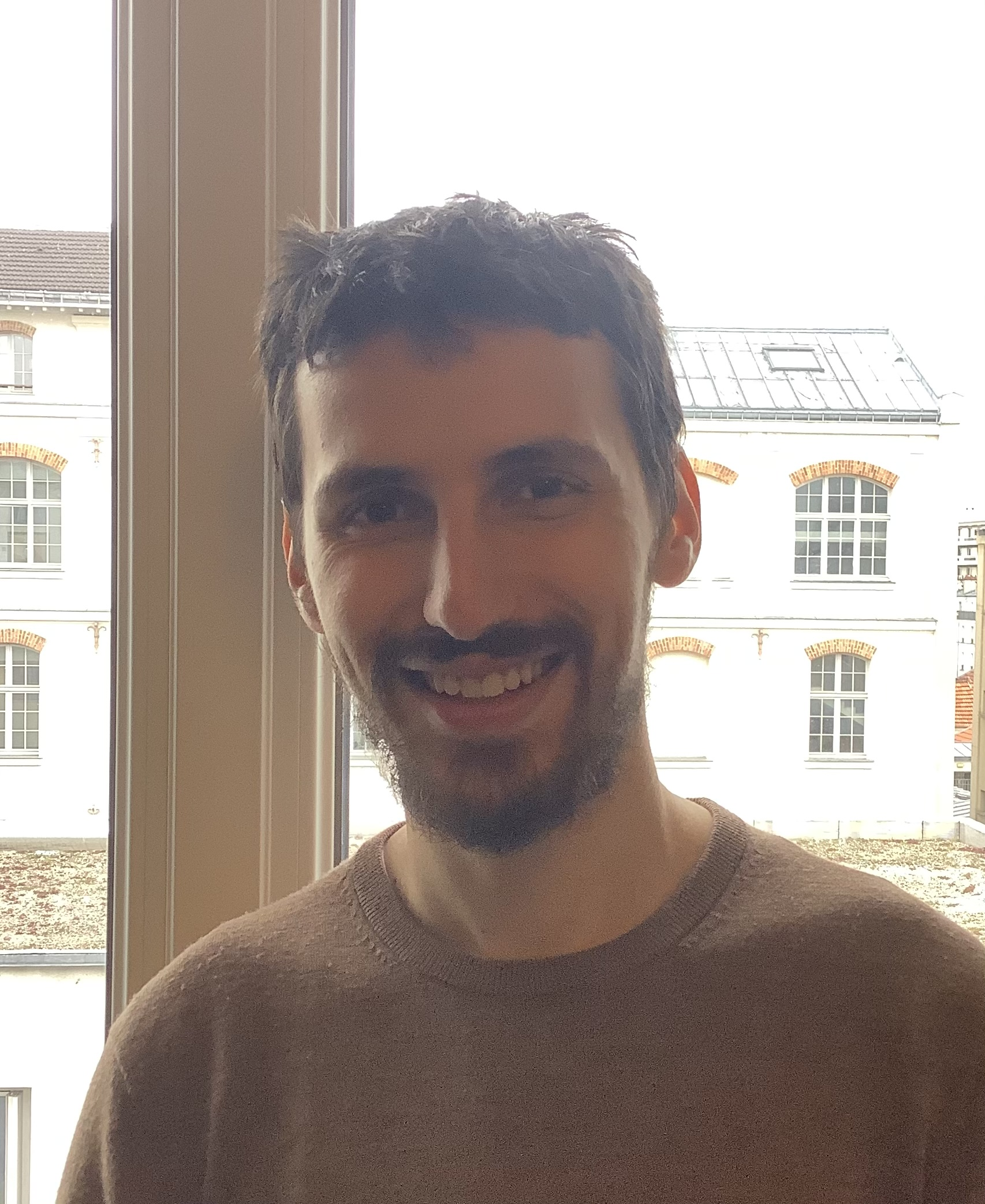
Aymeric Dieuleveut
École polytechnique
I am a Professor in Statistics and Machine Learning at École Polytechnique (CMAP, Institut Polytechnique de Paris) and scientific co-director of Hi! PARIS. My work is centered on the mathematical foundations of machine learning: the analysis of stochastic algorithms, the theory of federated and decentralized learning, and uncertainty quantification. A recurring theme is understanding how statistical and computational constraints interact at scale — and developing new tools or guarantees for methods used in practice. After graduating from ENS Paris, I received my PhD from ENS Paris (in the fantastic Sierra team), supervised by Francis Bach, including a wonderful visiting period at UC Berkeley (Martin Wainwright). I then held a postdoctoral position at EPFL (Martin Jaggi). I joined École Polytechnique in 2019 as an Assistant Professor, defended my habilitation (HDR) in 2023, and was promoted to Professor the same year. Since 2025, I serve as Scientific Co-Director of Hi! PARIS, our Center on Data Analytics and Artificial Intelligence for Science, Business and Society, created by Institut Polytechnique de Paris (IP Paris) and HEC Paris and joined by Inria (Centre Inria de Saclay).
I am a Professor in Statistics and Machine Learning at École Polytechnique (CMAP, Institut Polytechnique de Paris) and scientific co-director of Hi! PARIS. My work is centered on the mathematical foundations of machine learning: the analysis of stochastic algorithms, the theory of federated and decentralized learning, and uncertainty quantification. A recurring theme is understanding how statistical and computational constraints interact at scale — and developing new tools or guarantees for methods used in practice. After graduating from ENS Paris, I received my PhD from ENS Paris (in the fantastic Sierra team), supervised by Francis Bach, including a wonderful visiting period at UC Berkeley (Martin Wainwright). I then held a postdoctoral position at EPFL (Martin Jaggi). I joined École Polytechnique in 2019 as an Assistant Professor, defended my habilitation (HDR) in 2023, and was promoted to Professor the same year. Since 2025, I serve as Scientific Co-Director of Hi! PARIS, our Center on Data Analytics and Artificial Intelligence for Science, Business and Society, created by Institut Polytechnique de Paris (IP Paris) and HEC Paris and joined by Inria (Centre Inria de Saclay).
Workflow Chair
Mathieu Dagréou
INRIA
I am a postdoctoral researcher at Inria in the PreMeDICaL team working with Aurélien Bellet on trustworthy machine learning. Prior to that, I did my Ph.D. at Inria in the Mind team under the supervision of Pierre Ablin , Thomas Moreau , and Samuel Vaiter . I worked on bilevel optimization for machine learning.
I am a postdoctoral researcher at Inria in the PreMeDICaL team working with Aurélien Bellet on trustworthy machine learning. Prior to that, I did my Ph.D. at Inria in the Mind team under the supervision of Pierre Ablin , Thomas Moreau , and Samuel Vaiter . I worked on bilevel optimization for machine learning.
Workflow Chair
Jean-Baptiste Fermanian
INRIA/INRAE
Jean-Baptiste Fermanian is a postdoctoral researcher at Inria in Montpellier, France. In November, he will join Inrae Montpellier as a permanent researcher. His research lies at the intersection of statistics and machine learning, with a focus on high-dimensional multi-task and federated learning, as well as uncertainty quantification through conformal prediction. His work is motivated by applications in the medical and ecological domains. He received his PhD from Université Paris-Saclay.
Jean-Baptiste Fermanian is a postdoctoral researcher at Inria in Montpellier, France. In November, he will join Inrae Montpellier as a permanent researcher. His research lies at the intersection of statistics and machine learning, with a focus on high-dimensional multi-task and federated learning, as well as uncertainty quantification through conformal prediction. His work is motivated by applications in the medical and ecological domains. He received his PhD from Université Paris-Saclay.
Workshop Chair
Claire Vernade
University of Technology Nuremberg
Claire Vernade is a Full Professor for Foundations of Machine Learning at the University of Technology Nuremberg. Her research focuses on sequential decision making, especially theoretical reinforcement learning, learning theory, bandit algorithms, and principled methods for interactive and adaptive machine learning systems. She previously held roles at the University of Tübingen, DeepMind, Amazon, and the University of Magdeburg, and received her PhD from Telecom ParisTech. Her work has been recognized with an Emmy Noether Award and an ERC Starting Grant.
Claire Vernade is a Full Professor for Foundations of Machine Learning at the University of Technology Nuremberg. Her research focuses on sequential decision making, especially theoretical reinforcement learning, learning theory, bandit algorithms, and principled methods for interactive and adaptive machine learning systems. She previously held roles at the University of Tübingen, DeepMind, Amazon, and the University of Magdeburg, and received her PhD from Telecom ParisTech. Her work has been recognized with an Emmy Noether Award and an ERC Starting Grant.
Publication Chair
Martin Trapp
KTH Royal Institute of Technology
Martin Trapp is an assistant professor of probabilistic machine learning at KTH Royal Institute of Technology, a WASP Fellow, and a member of the ELLIS Unit Sweden. Previously, he was an Academy of Finland-funded postdoctoral researcher at Aalto University (2020–2025) and a visiting researcher at the University of British Columbia (2023) and the University of Cambridge (2018). He received his PhD in computer science from Graz University of Technology in 2020. His research focuses on reliable and uncertainty-aware machine learning, in particular tractable probabilistic models, Bayesian deep learning, and scalability. More information can be found at: trappmartin.github.io.
Martin Trapp is an assistant professor of probabilistic machine learning at KTH Royal Institute of Technology, a WASP Fellow, and a member of the ELLIS Unit Sweden. Previously, he was an Academy of Finland-funded postdoctoral researcher at Aalto University (2020–2025) and a visiting researcher at the University of British Columbia (2023) and the University of Cambridge (2018). He received his PhD in computer science from Graz University of Technology in 2020. His research focuses on reliable and uncertainty-aware machine learning, in particular tractable probabilistic models, Bayesian deep learning, and scalability. More information can be found at: trappmartin.github.io.
Logistics Chair
Mary Ellen Perry
Admin.
AISTATS
Mary Ellen Perry is a longtime academic conference organizer and administrator who has helped manage major machine learning conferences including NeurIPS and ICML. She served as Executive Director of the NeurIPS Foundation while affiliated with the Salk Institute, and has also been listed in ICML conference operations and contact roles. Her work has supported the logistics, administration, and execution of some of the world’s leading machine learning research conferences
Mary Ellen Perry is a longtime academic conference organizer and administrator who has helped manage major machine learning conferences including NeurIPS and ICML. She served as Executive Director of the NeurIPS Foundation while affiliated with the Salk Institute, and has also been listed in ICML conference operations and contact roles. Her work has supported the logistics, administration, and execution of some of the world’s leading machine learning research conferences
Logistics Chair
Max Wiesner
AIStats
Max Wiesner is a data / AI infrastructure engineer who builds data systems, AI products, and the infrastructure behind them. He’s also been involved in organizing major ML conferences like NeurIPS, ICML, ICLR, AISTATS, and MLSys for years, working across both the technical and operational sides of running them.
Max Wiesner is a data / AI infrastructure engineer who builds data systems, AI products, and the infrastructure behind them. He’s also been involved in organizing major ML conferences like NeurIPS, ICML, ICLR, AISTATS, and MLSys for years, working across both the technical and operational sides of running them.